

When mining operations and aggregate producers evaluate high-capacity ore-processing platforms, the initial sticker price of a portable crusher often triggers immediate sticker shock. Configured with jaw crushers or high-performance hydraulic cone units—such as the elite K and NK series portable wheel and crawler stations—mobile units command a noticeable upfront premium over their stationary counterparts.
However, viewing this investment solely through the lens of capital expenditure (CapEx) is a financial miscalculation. To understand the true economics of modern ore crushing, we must deconstruct the pricing matrix into a Total Cost of Ownership (TCO) framework.
When you account for eliminated infrastructure, slashed operational expenses (OpEx), and accelerated time-to-revenue, the upfront mobile premium doesn’t just shrink—it completely neutralizes.
The Capital Illusion: Upfront Premium vs. Civil Foundation Elimination
A direct line-item comparison between a stationary crusher and a portable station often triggers immediate sticker shock. The integrated engineering of a mobile unit commands a premium. However, focusing solely on the acquisition cost overlooks the massive capital expenditure required to put a stationary plant into production.
+------------------------------------------------------------+
|  STATIONARY PLANT CAPEX                                    |
|  [Base Crusher] + [Civil Engineering] + [Concrete Foundations] + [Longer Setup]
+------------------------------------------------------------+
                             VS.
+------------------------------------------------------------+
|  PORTABLE PLATFORM CAPEX                                   |
|  [Integrated Premium Mobile Station] ---> (Zero Civil Costs)
+------------------------------------------------------------+
Eliminating Civil Foundation Engineering
Stationary crushing plants require extensive site preparation, geomechanic testing, deep excavation, and reinforced concrete foundations to withstand the violent dynamic loads of primary ore reduction.
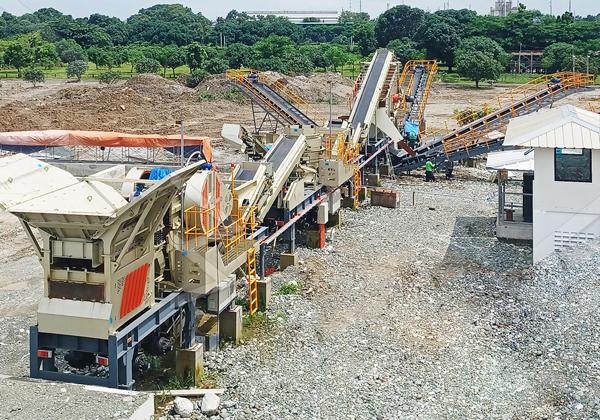
Portable crushing platforms bypass this entirely. Engineered with high-strength, heavy-duty chassis structures, these stations are designed to isolate and absorb severe operational vibrations internally. By eliminating the need for poured concrete foundations, operators routinely save anywhere from tens of thousands to hundreds of thousands of dollars in civil engineering costs alone.
Zero-Curing Deployment
Time is money, but in mining, lead time is capital risk. A stationary plant’s concrete foundations can take 28 days or more to achieve full structural cure before equipment assembly can even begin.
Portable wheel or crawler series stations offer immediate site setup. They arrive at the mine site, deploy their hydraulic support legs or position their tracks, and can begin commissioning within days—if not hours. This “Zero-Curing” deployment accelerates the time-to-first-ton, significantly improving the project’s Net Present Value (NPV).
The Premium Components Tier: Mitigating Risk and Downtime
When analyzing the portable crusher pricing matrix, investment tiers are strictly tied to the integration of advanced, heavy-duty components. In an ore-processing environment, opting for a lower-tier, stripped-down mobile unit is a recipe for operational failure. Premium investment tiers protect against the most volatile variable in TCO: unplanned downtime.
Integrated Intelligent Control Cabins
Premium K and NK series stations feature onboard, climate-controlled intelligent cabins equipped with advanced PLC systems. These units provide real-time diagnostics, load sensing, and automated feed regulation. By optimizing the choke-fed state of the crushing chamber, the system prevents catastrophic overloads and maximizes throughput efficiency without human error.
Automated Hydraulic CSS Adjusters
In ore processing, the Closed Side Setting (CSS) dictates both product sizing and liner wear patterns. Manually adjusting a traditional crusher is hazardous, time-consuming, and prone to inaccuracy. Premium configurations utilize automated hydraulic CSS adjusters. These systems allow operators to alter settings on the fly via a touchscreen. More importantly, they provide automatic tramp metal relief—if an uncrushable object (like a loader tooth) enters the chamber, the hydraulics instantly open to clear the tramp and reset to the exact operational CSS automatically, mitigating severe mechanical risk.
The TCO Matrix: Stationary vs. High-Capacity Portable
To visualize how the upfront mobile premium is neutralized, consider this high-level TCO structural comparison over a typical 5-year mining lifecycle:
| Cost Component | Stationary Crushing Plant | Premium Portable Station (K/NK Series) | TCO Winner |
| Initial Equipment Purchase | Moderate | High (The Mobile Premium) | Stationary |
| Civil & Concrete Engineering | High (Excavation, forms, rebar, labor) | Zero | Portable |
| Time to Deployment | Slow (Weeks of curing & assembly) | Ultra-Fast (Zero-Curing) | Portable |
| Lifecycle Haulage OPEX | Escalating (As mine face advances) | Suppressed (Crusher follows the face) | Portable |
| Risk Mitigation (Downtime) | Variable (Often manual overrides) | Highly Optimized (Automated CSS & Intelligence) | Portable |
Final Veridct: The True Price of Mobility
When evaluating the price of a portable crusher for an ore crushing plant, looking strictly at the upfront price tag is an incomplete financial assessment.
The initial capital premium of a high-capacity mobile station is a strategic trade-off. By eliminating civil foundation engineering, wiping out concrete curing delays, slashing lifecycle haulage loops, and isolating mechanical risk through intelligent automation, the portable platform systematically claws back its upfront cost. For modern, agile mining operations, the portable crusher isn’t just a piece of machinery—it is an optimized asset designed to minimize total cost of ownership and maximize long-term profitability.