

Cone crushers are widely used in the mining and aggregate industries for crushing hard and abrasive materials. They offer efficiency, reliability, and versatility, making them a preferred choice for secondary, tertiary, and quaternary crushing stages. This article explores the key aspects of cone crushers, including their working principles, types, advantages, and maintenance considerations.
How Does a Cone Crusher Work?
A cone crusher operates by compressing rock between a gyrating spindle (mantle) and a concave hopper. The rotating mantle exerts continuous pressure on the incoming feed material, breaking it into smaller pieces until the desired size is achieved. The crushed material then exits through the discharge opening at the bottom.
Key Components of a Cone Crusher:
- Mantle – Moves in an eccentric motion to crush the material.
- Concave – The stationary outer surface that forms the crushing chamber.
- Eccentric Assembly – Drives the mantle’s gyratory motion.
- Hydraulic System – Allows for quick adjustment of the crusher setting and overload protection.
- Drive Motor & Belt System – Powers the crusher’s operation.
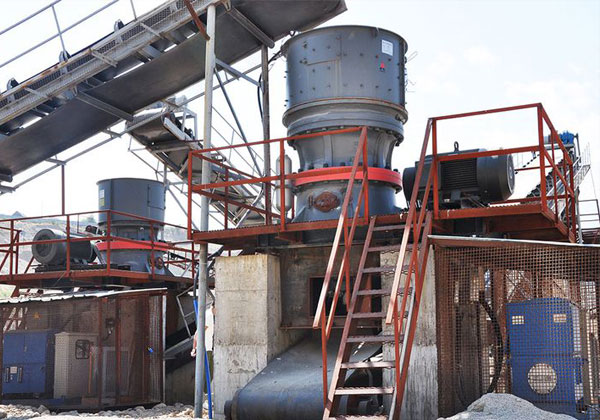
Types of Cone Crushers
- Spring Cone Crusher – Uses spring pressure for overload protection. It’s cost-effective but less precise than hydraulic models.
- Hydraulic Cone Crusher (HPT/HST Series) – Features advanced hydraulic systems for better crushing performance, easier adjustments, and higher efficiency.
- Compound Cone Crusher – A hybrid design combining spring and hydraulic systems for medium-hard material crushing.
Advantages of Cone Crushers
- High Efficiency – Capable of producing well-shaped, uniform-sized particles.
- Versatility – Suitable for a wide range of materials, from granite to basalt and iron ore.
- Adjustable Settings – The hydraulic system allows precise control over discharge size.
- Durability – Designed for long service life with robust construction and wear-resistant liners.
- Low Operational Costs – Compared to other crushing machines, they offer better energy efficiency.
Choosing the Right Cone Crusher
When selecting a cone crusher, consider:
- Material Hardness (CS series vs. HPT hydraulic models)
- Capacity Requirements (throughput per hour)
- Maintenance & Spare Parts Availability
- Automation & Control Features (hydraulic adjustment, remote monitoring)
For more specialized applications, alternative models like CS cone crushers or spring cone crushers may be selected based on crushing needs and budget.
Final Thoughts
Understanding cone crusher specifications, performance advantages, and application suitability helps optimize production efficiency. Whether for mining, construction, or industrial use, selecting the right crusher ensures long-term productivity and cost-effectiveness.
For further guidance, consulting with industry experts or manufacturers can provide tailored recommendations.