

In the modern mining and aggregate industries, efficiency, reliability, and productivity are the foundation of success. Rock crushing is a vital process in mineral extraction, infrastructure construction, and aggregate production. Among the many types of crushers available, the cone crusher stands out as one of the most efficient machines for reducing large rocks into high-quality, uniformly sized aggregates. Its ability to combine high throughput with fine control over product size makes it indispensable in quarrying, mining, and recycling applications.
How a Cone Crusher Works
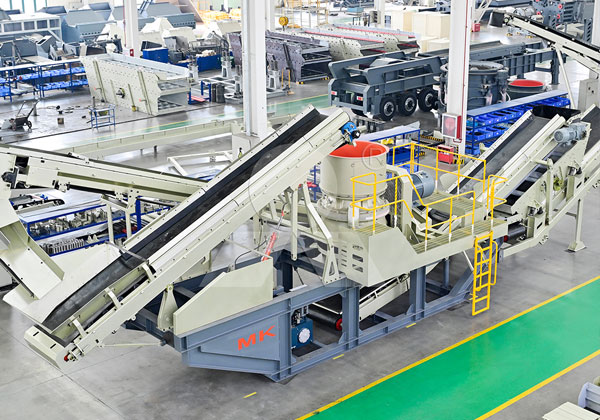
A cone crusher operates on the principle of compression. The feed material is placed between a gyrating mantle and a stationary concave (bowl liner). As the mantle moves in an eccentric motion, it compresses the rock against the concave surface, breaking it into smaller particles. This repeated action results in gradual reduction until the desired size is achieved.
Key mechanical elements include:
-
Mantle & Concave Liners: Replaceable wear parts that handle direct crushing stress.
-
Eccentric Drive: Provides the gyrating movement for efficient compression.
-
Hydraulic Adjustment System: Allows operators to control the discharge opening and product size.
-
Safety Features: Overload protection prevents damage from uncrushable materials.
Advantages of Cone Crushers in Rock Crushing
-
High Crushing Efficiency
Cone crushers provide a high reduction ratio, allowing large feed sizes to be transformed into smaller, consistent outputs in fewer stages. -
Uniform Particle Shape
The compressive crushing mechanism ensures cubical aggregate, which is critical for concrete and asphalt production. -
Wide Range of Applications
Cone crushers handle hard and abrasive materials such as granite, basalt, iron ore, and copper ore, making them suitable for mining and construction industries. -
Automation and Adjustability
Modern cone crushers come with advanced automation systems that monitor load, wear, and performance, reducing downtime and optimizing output. -
Durability and Low Operating Cost
Heavy-duty design and replaceable liners extend machine life. Combined with energy efficiency, they lower overall operational expenses.
Challenges and Considerations
While cone crushers are efficient, operators must address:
-
Wear and Tear: Regular replacement of liners is necessary.
-
Energy Consumption: Though efficient, large-scale crushing requires significant power.
-
Material Variability: Moisture, hardness, and feed size can affect performance.
-
Investment Cost: Cone crushers often require higher initial investment compared to simpler machines like jaw crushers.
The cone crusher stands out as a highly efficient and versatile machine for rock crushing, combining high productivity, consistent product quality, and versatility. Its ability to handle a wide range of materials efficiently makes it one of the most reliable machines for both large-scale mining and aggregate production. With ongoing technological improvements such as automation, improved liner materials, and energy-saving features, cone crushers are set to remain a cornerstone of efficient rock crushing.