

Designing a crushing plant with minimum equipment is an effective strategy for reducing capital investment, operating costs, maintenance requirements, and overall plant complexity. However, minimizing equipment does not mean compromising production capacity, product quality, or operational reliability. Instead, the objective is to develop a streamlined crushing system that achieves the required throughput and product gradation using the fewest practical machines and the most efficient material flow.
A well-designed minimum-equipment crusher plant integrates high-performance crushing technology, optimized screening arrangements, and intelligent equipment selection. By focusing on a simplified primary-secondary crushing configuration, operators can achieve high productivity while minimizing the plant footprint and long-term operating expenses.
1. Principles of Lean Crusher Plant Layout Design
The foundation of minimum-equipment crusher plant design is an efficient process flow. Every machine should perform a clearly defined function, and unnecessary material transfers, redundant crushing stages, and excessive conveyors should be eliminated.
A typical lean crushing plant consists of three essential components:
- Primary crushing: Reduces run-of-mine material into a manageable feed size.
- Secondary crushing: Further reduces material to meet the required product specifications.
- Integrated screening: Separates crushed material into different size fractions and controls final product gradation.
For many quarry and aggregate applications, a two-stage crushing arrangement can replace more complicated configurations involving multiple crushing machines. The appropriate design depends on feed characteristics, maximum feed size, material hardness, abrasiveness, and final product requirements.
Equipment should be positioned to support gravity-assisted material movement wherever practical. Locating primary and secondary crushers in a logical sequence reduces conveyor length, transfer points, structural steel requirements, and material handling energy consumption.
A compact layout should also provide sufficient space for maintenance access, equipment removal, inspection, and safe operation. Minimum footprint must never come at the expense of maintainability or workplace safety.
2. Selecting High-Efficiency Crushing Equipment
Equipment selection is the most important factor in achieving a simplified crusher plant without sacrificing performance.
The primary crusher must accept the maximum expected feed size and provide a consistent discharge suitable for the secondary crushing stage.
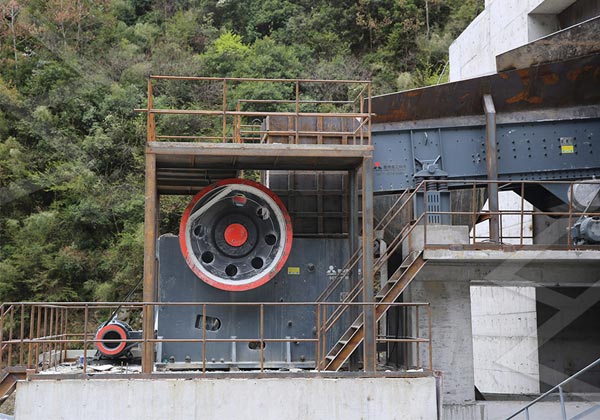
For hard and abrasive rock, jaw crushers are commonly preferred for primary crushing because of their robust construction, relatively simple maintenance, and ability to handle large feed materials. For suitable applications involving high throughput and appropriate feed characteristics, gyratory crushers may provide a more efficient alternative.
The secondary crusher should deliver the required reduction ratio while maintaining stable operating conditions.
Cone crushers are particularly suitable for processing hard and abrasive materials. Modern cone crushers offer adjustable settings, hydraulic protection, and automated control systems that help maintain consistent product quality. For softer or less abrasive materials, impact crushers can provide higher reduction ratios and improved particle shaping.
The selection process should consider:
- Required feed and discharge particle sizes.
- Reduction ratio and maximum processing capacity.
- Material hardness, moisture, and abrasiveness.
- Crusher power consumption and operating costs.
- Wear-part availability and replacement intervals.
- Compatibility with downstream screening equipment.
Selecting a crusher with sufficient capacity and an appropriate reduction ratio can eliminate the need for an additional crushing stage. However, equipment should not be unnecessarily oversized, as this can increase initial investment and energy consumption.
3. Integrating Screening to Reduce Equipment Count
Screening plays a critical role in minimizing the number of machines required in a crushing plant.
Instead of installing separate screening equipment after every crushing stage, an integrated screening arrangement can classify material efficiently and direct each fraction to its appropriate destination.
A practical configuration places a vibrating screen after the secondary crusher. Oversized material is returned through a controlled recirculation circuit, while correctly sized material proceeds directly to finished product stockpiles.
This closed-circuit arrangement improves crushing efficiency by preventing already compliant material from undergoing unnecessary additional reduction.
Screen selection should be based on required screening capacity, aperture size, material characteristics, moisture content, and separation efficiency. Screen area must accommodate peak operating loads rather than average production alone.
Where several product sizes are required, a multi-deck vibrating screen can separate multiple fractions using a single screening machine. This approach reduces the need for additional screens and simplifies material handling.
4. Optimizing Throughput and Energy Efficiency
A minimum-equipment crushing plant must be designed around the required production target rather than simply minimizing the purchase price of individual machines.
The design process should begin with a detailed mass balance identifying feed capacity, crushing-stage output, circulating loads, screening efficiency, and final product quantities.
Crusher capacity should be matched to the actual operating conditions, including variations in feed size, material properties, and moisture.
Variable-frequency drives, automated feed control, and intelligent crusher monitoring can further improve efficiency. Maintaining a consistent feed rate helps prevent overloading, reduces unnecessary power consumption, and improves equipment utilization.
Additionally, minimizing conveyor distances and transfer points reduces energy requirements and limits material spillage, dust generation, and maintenance demands.
5. Reliability, Maintenance, and Operational Simplicity
Reducing the number of machines can improve reliability by decreasing the number of mechanical components requiring inspection, lubrication, servicing, and replacement.
Nevertheless, equipment redundancy and process flexibility should be evaluated carefully. A single critical crusher or screen can become a production bottleneck if it fails.
The design should therefore incorporate accessible maintenance platforms, suitable lifting facilities, replaceable wear components, effective dust suppression, and appropriate electrical and control systems.
Monitoring systems for vibration, bearing temperature, lubrication condition, and motor loading can identify developing problems before they result in unexpected shutdowns.
Standardizing equipment models and wear parts wherever practical also simplifies spare-parts management and maintenance training.