

The primary crusher is a critical component of a mineral processing plant, responsible for reducing run-of-mine (ROM) ore into manageable particle sizes for subsequent processing stages. Its performance directly influences plant throughput, energy consumption, equipment availability, and overall operational costs. In high-capacity hard-rock and abrasive mineral operations, selecting and optimizing the right primary crushing system is essential for achieving reliable production and consistent downstream feed conditions.
Primary crushing systems typically use jaw, gyratory, or primary impact crushers, depending on ore characteristics, production requirements, and plant configuration. Effective circuit optimization requires careful attention to crusher selection, operating parameters, wear-part management, automation, energy efficiency, and maintenance safety.
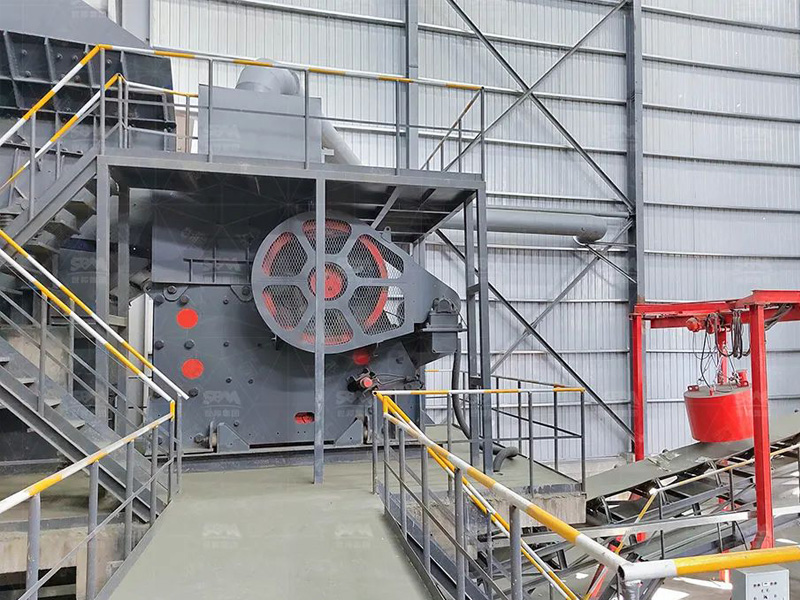
1. Selecting the Appropriate Primary Crusher
Crusher selection should reflect the physical and mechanical properties of the ore, including compressive strength, abrasiveness, moisture content, maximum feed size, and expected production capacity.
Jaw crushers are commonly used in small-to-medium and some large-scale operations. Their relatively simple construction, robust design, and ability to handle large feed rocks make them suitable for hard, abrasive materials. However, their intermittent crushing action can limit throughput compared with high-capacity gyratory systems.
Gyratory crushers are preferred for high-volume mining operations where continuous crushing and high availability are essential. Their ability to process large feed sizes at substantial capacities makes them particularly suitable for large open-pit mines. They generally offer higher throughput and a more consistent discharge profile.
Primary impact crushers use high-speed impact forces to break material and can achieve substantial reduction ratios. They are particularly effective for softer or moderately hard materials. However, high wear rates and maintenance costs can make them less attractive for highly abrasive, hard-rock applications.
Equipment evaluation should consider installed power, maximum feed dimensions, chamber geometry, discharge settings, structural strength, maintainability, and total lifecycle cost rather than purchase price alone.
2. Optimizing Throughput and Reduction Ratios
Maximizing primary crushing throughput requires balancing feed conditions, crusher capacity, and downstream processing requirements. The reduction ratio, calculated as the feed size divided by the product size, is an important indicator of crushing performance.
Primary crushers typically operate at reduction ratios of approximately 3:1 to 6:1, although actual values depend on crusher design, ore properties, and operating conditions.
Consistent feed distribution is essential. Uneven loading, excessive fines, oversized rocks, and fluctuating feed rates can reduce capacity and increase mechanical stress. Installing suitable grizzly feeders, rock breakers, and feed hoppers helps control material flow and prevent blockages.
Crusher settings should be optimized to produce a product size compatible with secondary crushing equipment. Excessively tight settings may increase power consumption and wear, while overly wide settings can overload downstream circuits. Regular particle-size analysis and monitoring of crusher discharge are therefore necessary.
3. Wear-Part Longevity and Maintenance Management
Wear components represent a significant portion of primary crushing operating expenditure, particularly in abrasive mineral environments. Jaw plates, mantles, concaves, blow bars, and liners must be selected according to ore hardness, abrasiveness, and crushing conditions.
High-manganese steel is widely used in jaw crusher wear components because of its work-hardening properties. Alloy selection and liner profiles should be evaluated against actual operating conditions rather than relying solely on material specifications.
Extending wear-part life requires:
- Maintaining uniform feed distribution and avoiding localized loading.
- Preventing tramp metal from entering the crushing chamber.
- Monitoring liner thickness and wear patterns.
- Scheduling replacements based on measured wear and performance trends.
- Using condition monitoring to identify abnormal vibration, temperature, and mechanical stress.
A proactive maintenance strategy reduces unplanned downtime and enables replacement activities to be coordinated with planned shutdowns.
4. Automated Control and Process Monitoring
Modern primary crushing circuits increasingly use programmable logic controllers (PLCs), distributed control systems (DCS), and integrated instrumentation to improve operational stability.
Important monitoring parameters include:
- Crusher motor current and power consumption.
- Feed rate and hopper level.
- Crusher operating pressure and temperature.
- Bearing vibration and lubrication condition.
- Discharge particle-size distribution.
- Equipment availability and downtime.
Automated feeder control can maintain stable crusher loading and prevent overfeeding. Interlocks and alarms also protect equipment against excessive loads, lubrication failures, and other abnormal operating conditions.
Integrating crusher data with the plant control system enables operators to identify performance trends, optimize operating settings, and coordinate primary crushing with secondary processing.
5. Maintenance Safety and Reliability
Primary crusher maintenance involves significant hazards, including stored mechanical energy, suspended loads, falling rocks, confined spaces, and unexpected equipment movement.
Strict lockout/tagout (LOTO) procedures must be implemented before inspection or maintenance. All electrical, hydraulic, pneumatic, and mechanical energy sources should be isolated and verified. Personnel must also follow site-specific confined-space procedures, lifting plans, and working-at-height requirements.
Remote rock-breaking systems, mechanized liner handling, and improved access platforms can reduce personnel exposure to hazardous activities. Routine inspections should focus on structural integrity, lubrication systems, hydraulic components, guarding, and emergency stops.