

The selection of quarry sand and gravel crusher suppliers is a critical decision for aggregate producers seeking reliable production, consistent product quality, and long-term operational profitability. As demand for manufactured sand, construction aggregates, and infrastructure materials continues to grow, quarry operators need more than individual crushing machines. They need integrated processing solutions capable of handling different rock types, meeting precise particle-size specifications, and maintaining stable output under demanding operating conditions.
A qualified supplier should therefore be evaluated not simply as an equipment manufacturer but as a full-spectrum original equipment manufacturer (OEM) capable of engineering, manufacturing, installing, and supporting complete sand-and-gravel processing plants.
1. Evaluate Complete Crushing and Screening Capabilities
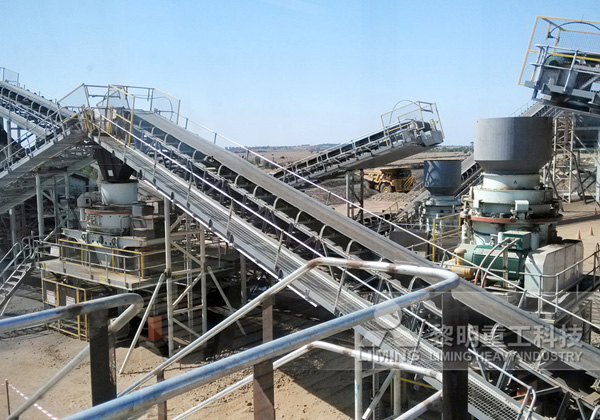
The first technical criterion is whether a supplier can provide a complete crushing and screening production line rather than isolated machines. A well-designed quarry processing system typically combines primary crushing, secondary or tertiary crushing, shaping, screening, and sand recovery.
A typical configuration includes:
- Primary jaw crushers: Designed to process large feed materials and reduce blasted rock into manageable sizes. Important evaluation factors include feed opening dimensions, crushing capacity, motor power, and liner durability.
- Multi-cylinder hydraulic cone crushers: Suitable for secondary and tertiary crushing, particularly when processing hard and abrasive materials. Their adjustable settings, hydraulic protection systems, and stable crushing performance help maintain consistent aggregate grading.
- Rock-on-rock VSI sand makers: Essential for manufactured sand production and aggregate shaping. Evaluate rotor design, crushing efficiency, wear-part consumption, and the ability to control particle shape and fines generation.
- Multi-deck vibrating screens: Responsible for separating finished aggregates into different commercial sizes. Screen area, vibration characteristics, deck configuration, and screening efficiency directly influence final product quality.
Suppliers should demonstrate how these machines operate together, including their material-flow balance, production capacity, and finished-product distribution.
2. Assess Plant Configuration Flexibility
Quarry projects differ significantly in geology, available land, infrastructure, production targets, and investment budgets. A capable OEM should offer multiple plant configurations instead of forcing every customer into a standardized design.
Three configurations deserve particular consideration.
Stationary crushing plants are appropriate for established quarries with long-term production requirements. They offer substantial processing capacity, comprehensive equipment integration, and opportunities for automation. Their permanent foundations and infrastructure make them suitable for operations with stable extraction locations.
Modular skid-mounted plants provide a practical balance between mobility and structural stability. Equipment can be assembled into prefabricated modules, reducing installation complexity and simplifying transportation. These systems are particularly attractive for medium-sized projects, phased capacity expansion, and sites where civil construction needs to be minimized.
Track-mounted mobile crushing plants offer greater flexibility for temporary projects, distributed extraction areas, and operations requiring frequent relocation. Integrated feeding, crushing, screening, and optional conveying equipment can reduce material transportation and accelerate commissioning.
When comparing suppliers, examine whether they can recommend the appropriate configuration based on actual site conditions rather than simply promoting their most expensive equipment.
3. Examine Sand Washing and Classification Technology
Manufactured sand quality is determined by more than crushing performance. Excessive clay, dust, and undesirable fines can affect concrete workability, strength, and overall product acceptance.
A professional supplier should provide both wet and dry processing options.
Wet washing systems typically incorporate sand washers, hydrocyclones, slurry pumps, dewatering screens, and water-recycling equipment. They are particularly useful when feed materials contain clay contamination or require effective removal of fine impurities.
Dry air-classification systems use controlled airflow and separation technology to remove excessive ultrafine particles without relying on large volumes of process water. They are attractive in water-scarce regions and locations where wastewater management is challenging.
The supplier should explain achievable sand grading, fines-control performance, water consumption, dust management, and the suitability of each system for the customer’s raw materials.
4. Verify Manufacturing Quality and Engineering Expertise
Equipment specifications alone cannot establish supplier reliability. Buyers should investigate manufacturing capabilities, quality-control procedures, and engineering experience.
Important criteria include structural fabrication quality, casting and machining standards, bearing and hydraulic component selection, electrical system integration, and protective design features.
Request technical drawings, equipment specifications, material certificates where applicable, factory inspection records, and references from comparable quarry installations.
It is also important to determine whether the supplier conducts raw-material testing and production-line simulations before finalizing equipment selection. Proper engineering reduces the risks of bottlenecks, excessive recirculation, premature wear, and underperforming output.
5. Compare Total Cost of Ownership, Not Just Purchase Price
The lowest initial quotation does not necessarily represent the best commercial value. Quarry operators should compare the total cost of ownership throughout the expected operating life of the plant.
Key financial indicators include:
- Initial equipment investment and installation costs.
- Energy consumption per ton of finished aggregate.
- Wear-part replacement frequency and associated expenses.
- Routine maintenance and labor requirements.
- Water consumption and wastewater treatment costs.
- Equipment availability and production downtime.
- Spare-parts accessibility and technical service expenses.
A transparent supplier should provide realistic production estimates and clearly distinguish guaranteed performance from theoretical equipment capacity.
Buyers should also clarify warranty coverage, payment milestones, delivery schedules, commissioning responsibilities, and the availability of long-term service agreements.
6. Prioritize After-Sales Support and Turnkey Delivery
A complete OEM partner should remain accountable beyond equipment shipment. Turnkey capabilities can include process engineering, plant layout design, equipment manufacturing, electrical automation, installation supervision, commissioning, operator training, and performance optimization.
After-sales support is equally important. Ask about spare-parts inventories, remote troubleshooting, maintenance guidance, technician response times, and service coverage in the project region.
Suppliers with established engineering and service teams can help minimize unexpected shutdowns and maintain consistent production as operating requirements change.
Conclusion: Choose a Long-Term Processing Partner
Selecting quarry sand and gravel crusher suppliers requires a balanced assessment of engineering capability, equipment quality, plant flexibility, processing technology, commercial transparency, and lifecycle support.
The strongest choice is a full-spectrum OEM capable of delivering turnkey stationary, modular skid-mounted, and track-mounted mobile processing plants. By integrating jaw crushers, multi-cylinder hydraulic cone crushers, VSI sand makers, multi-deck vibrating screens, and wet washing or dry air-classification systems, such a manufacturer can provide solutions tailored to different quarry conditions and aggregate specifications.
Ultimately, the right supplier is not simply the company offering the lowest equipment price. It is the engineering partner that can deliver reliable production, consistent product quality, manageable operating costs, and sustainable value throughout the entire lifecycle of a quarry processing plant.