

Metal ore beneficiation is a crucial stage in mining operations, aiming to extract valuable minerals from raw ore while improving their grade and purity. Among the many steps involved—such as grinding, flotation, gravity separation, magnetic separation, and smelting—crushing stands out as one of the most fundamental and influential. A properly designed and efficient crushing system not only enhances mineral recovery but also significantly reduces processing costs.
This article explores the importance of crushers in metal ore beneficiation and the reasons they are indispensable in modern mining.
1. First Step Toward Mineral Liberation
Metal ores extracted from mines typically consist of large, uneven rocks combined with gangue materials. These massive blocks cannot be directly processed by grinding mills or separation equipment.
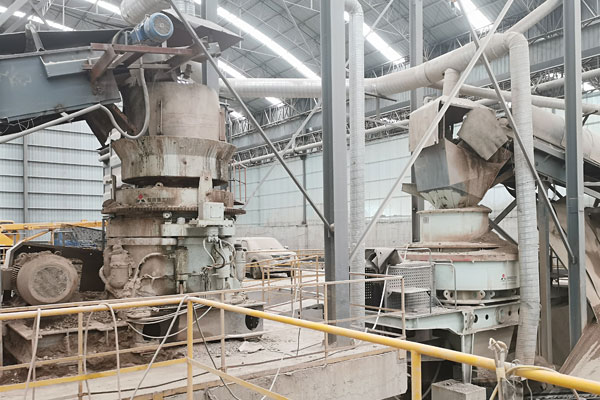
Crushers provide the initial size reduction, breaking the ore into smaller, manageable pieces.
This step is essential because:
-
It exposes the mineral grains, improving liberation during further processing.
-
It prevents equipment overload, especially in grinding mills.
-
It establishes a suitable particle size for downstream beneficiation processes.
Without proper crushing, mineral liberation will be incomplete, reducing recovery rates and efficiency.
2. Enhancing the Efficiency of Grinding Operations
Grinding is one of the costliest stages in mineral processing, often consuming up to 40–50% of the plant’s energy. Efficient crushing can significantly reduce this burden:
-
Well-crushed ore requires less grinding time and energy.
-
Properly sized feed improves mill throughput and reduces wear on grinding media.
-
Uniform particle distribution helps achieve a more stable beneficiation environment.
In short, better crushing means lower operational costs and higher beneficiation efficiency.
3. Improving the Effectiveness of Separation Processes
Each type of separation—whether magnetic, flotation, or gravity-based—demands specific particle size ranges.
Crushers help create the ideal particle size required for each ore type.
For example:
-
Iron ore beneficiation often requires fine crushing before magnetic separation.
-
Copper ore processing typically needs a combination of jaw and cone crushers for multi-stage reduction prior to flotation.
-
Gold ore beneficiation frequently incorporates crushing to enable better leaching or gravity separation performance.
Proper size control improves recovery rates, concentrate grade, and overall plant performance.
4. Essential for Handling Hard and Abrasive Ores
Metal ores such as iron ore, copper ore, manganese ore, and nickel ore are often extremely hard and abrasive. Crushers—especially jaw crushers, cone crushers, and gyratory crushers—are designed to handle such materials efficiently.
Their robust structure and wear-resistant components:
-
Ensure reliable operation under high-impact forces.
-
Extend service life and reduce maintenance costs.
-
Provide consistent crushing performance under tough conditions.
This resilience is crucial for large-scale, continuous mining operations.
5. Optimizing the Overall Beneficiation Flow
Crushing determines the quality and consistency of material fed into subsequent processes. A stable crushing system:
-
Ensures steady feed to grinding and separation circuits.
-
Reduces fluctuations in particle size distribution.
-
Minimizes bottlenecks and production interruptions.
-
Enhances the overall stability and productivity of the beneficiation plant.
For modern beneficiation plants, intelligent crushers with automation further improve accuracy and efficiency.
Crushers are the backbone of metal ore beneficiation, shaping the efficiency, cost-effectiveness, and environmental sustainability of mineral processing. As ore grades decline and environmental regulations tighten, investing in cutting-edge crushing technology becomes imperative for mines aiming for higher productivity and reduced operational costs. Whether processing iron, copper, or rare earth minerals, optimizing crushing stages ensures smoother downstream operations and maximizes the economic viability of metal extraction.