

Jaw crushers are widely used in mining, construction, and aggregate industries for primary crushing of hard and abrasive materials. The particle size of the discharged material is a critical factor that determines efficiency, product quality, and downstream processing. This analysis examines the key factors influencing discharge particle size in jaw crushers, including design parameters, operational settings, and material characteristics.
Factors Affecting Discharge Particle Size
- Crusher Design Parameters
- Feed Opening & Jaw Plate Geometry: A wider feed opening allows larger input material, while the shape and spacing of jaw plates (fixed and movable) influence the crushing action and final product size.
- Discharge Opening (Closed Side Setting – CSS): Adjusting CSS directly impacts the particle size; a smaller setting produces finer output.
- Crusher Type (Blake, Dodge, or Universal): Different designs produce varying particle size distributions due to differences in motion and crushing mechanisms.
- Material Properties
- Hardness & Abrasiveness: Softer materials break more easily, leading to finer particles, while harder rocks may produce coarser output.
- Moisture Content: Wet or sticky materials can cause clogging, affecting particle size uniformity.
- Feed Size Distribution: Well-graded feed material helps achieve more consistent output, whereas oversized feed may lead to uneven crushing.
- Operational Parameters
- Crushing Speed (RPM): Higher speeds can increase throughput but may reduce control over particle size.
- Stroke & Motion of Jaw: The eccentric movement of the swing jaw influences crushing efficiency and particle size.
- Feeding Rate: Overfeeding can result in coarser output, while controlled feeding enhances size consistency.
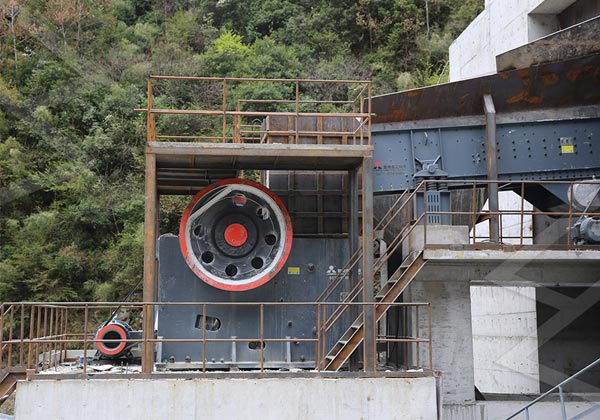
Methods to Control Discharge Particle Size
- Adjusting CSS (Closed Side Setting): The primary method for controlling particle size; tightening the gap reduces discharge size.
- Wear & Maintenance of Jaw Plates: Worn-out plates reduce crushing efficiency, leading to irregular particle sizes. Regular inspections are crucial.
- Use of Pre-Screening: Removing fine materials before crushing improves efficiency and optimizes discharge size.
- Optimizing Feed Size: Ensuring feed material matches crusher capacity avoids jamming and ensures uniform output.
Industry Applications & Particle Size Requirements
- Construction Aggregates: Commonly require medium-sized (20-50mm) particles for concrete and road bases.
- Mining & Mineral Processing: May need finer crushing (<10mm) for further grinding and beneficiation.
- Recycling (Concrete, Asphalt): Requires controlled particle sizes for reuse in new mixtures.
The discharge particle size of a jaw crusher is determined by a combination of mechanical design, material properties, and operational parameters. Proper adjustment of the CSS, wear management, and optimized feeding contribute to consistent product quality. Industry-specific requirements dictate the need for tailored crushing strategies to maximize efficiency and meet desired particle size distributions.
For further optimization, real-time monitoring and automated control systems can enhance jaw crusher performance, ensuring precise particle sizing while reducing operational costs.
Would you like a deeper analysis on any specific aspect, such as mathematical modeling of particle size distribution or case studies from different industries?